SPPI Short Term Options Play
Updated: Dec 2, 2019
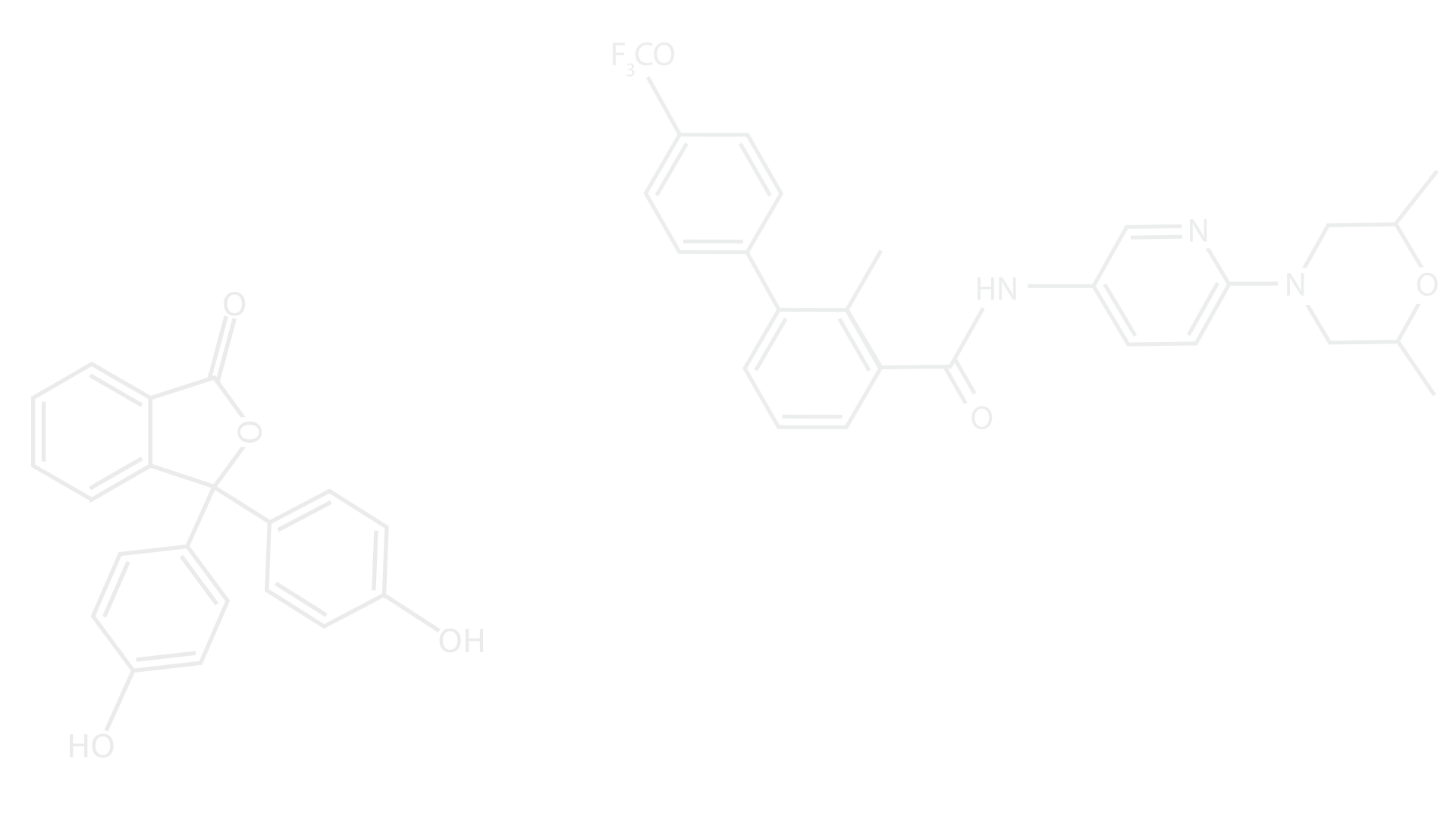
Spectrum Pharmaceuticals presents a compelling picture of short term price increase and in full disclosure, I have a substantial long position in SPPI that I expect to continue accumulating until buyout. Having said that, I am always very happy to use short term catalysts for options plays. I am bullish on the potential for a significant increase in the value of this equity in December 2019 based on topline results of cohort 1 of the ZENITH20 Phase 2 clinical trial evaluating poziotinib in previously treated NSCLC with exon 20 insertions. Previously reported data showed a 43% ORR and it is not unlikely that we will see even better ORR in this month's topline data. Additionally, the 38th annual JP Morgan Healthcare Conference will likely provide additional catalysts (for SPPI and for many other healthcare-related companies) and it would not be unusual for the lead-up to this conference to provide momentum.
But how much? Reading the tea leaves for short term price changes is a dicey proposition, but one that the options trader must face on a regular basis. I want to play out several scenarios for you making a set of assumptions. First, that topline data in December 2019 is positive. I assign a high probability to this event. Second, that there are no major destabilizing events for the broader market. I assign a moderately-high probability to this event, mostly because U.S. politicians are too busy with their own internal affairs to muck about with much else. In my opinion, having politicians sidetracked by trivia is often much better for the market than when they try to interfere. Third, since we are likely to be carrying options contracts very close to expiration I am not assuming any time value to my models and so profits will be calculated on intrinsic value alone. Fourth, we are planning to spend approximately $2,000 on these contracts.
With those assumptions in mind, let us look at January 17th 2020 options. This falls very nicely right after the JPM conference and so it is not unlikely that we would see best price around this time. Let's look at three potential equity prices against two different strike prices. In my evaluation of the January 2020 call strike prices just out the money (9, 10, 11, 12, and 13) it seemed to me that a 10 SP and a 12 SP offered the most advantageous premium. Evaluating those strike prices at an equity price of $12, $15, and $20 gives an interesting picture. These prices are by no means unprecedented given that previous data presented in late 2017 similarly pushed price from the $9 pps range to nearly $25 pps in August 2018. So let's play these out:
Scenario 1 - Minimal increase with catalyst - $12 pps
Call Jan 2020 $10 SP - 1.90 premium - $1,900 for 10 contracts
Call Jan 2020 $12 SP - 1.20 premium - $1,920 for 16 contracts
Profit @ 10 SP = $100 (+5.26%)
Profit @ 12 SP = ($1,920) (-100%)
As you can see, in the minimal increase scenario, the lower strike price preserves profit and in turn makes the probability of profit high. The higher strike price results in no profit and loss of the premium paid. C'est la vie.
Scenario 2 - Moderate increase with catalyst - $15 pps
Call Jan 2020 $10 SP - 1.90 premium - $1,900 for 10 contracts
Call Jan 2020 $12 SP - 1.20 premium - $1,920 for 16 contracts
Profit @ 10 SP = $3,100 (+63.16%)
Profit @ 12 SP = $2.880 (+51.58%)
In the moderate increase scenario, the $10 SP still has a small advantage, but nice profit can be seen at either strike price.
Scenario 3 - Maximal increase with catalyst - $20 pps
Call Jan 2020 $10 SP - 1.90 premium - $1,900 for 10 contracts
Call Jan 2020 $12 SP - 1.20 premium - $1,920 for 16 contracts
Profit @ 10 SP = $8,100 (+426.32%)
Profit @ 12 SP = $10,880 (+566.67%)
At the higher strike price, the profits increase markedly for both strike prices, but this is particularly true for the $12 strike price as the lower premium allowing us to buy more contracts more than compensates for the $2 difference in strike price. The question of what to buy depends in my mind about how bullish you are in the short term. I think the moderate increase scenario is by far the most likely, but I think the maximal increase scenario is more likely than the minimal increase scenario. Given those factors, my plan is to purchase my January 2020 call contracts at the $12 strike price to maximize profit potential. Personally, I will be using my existing cash reserves, but if a trader were short on cash and long on guts (with no comment on the long and short of brains with this strategy) one could write puts at the same expiration out of the money to gain premium given that puts at a $7 SP would offer about the same premium as you would spend on buying calls at $12 SP. Mind you, this is a very bullish move and if the stock tanked, you would be faced with the loss of your call option premium and having to cover your puts, buying at $7 and selling for less than that. It could be expensive to be wrong which is why I never write uncovered options. Always in the context of a spread or against my existing long position. Better to just keep a cash cushion for your options plays.
Until next time, happy trading!
ETR
Comments